Gods, Gamers and History: The Bavarian Research Centre for Interreligious Discourse at the Lange Nacht der Wissenschaften
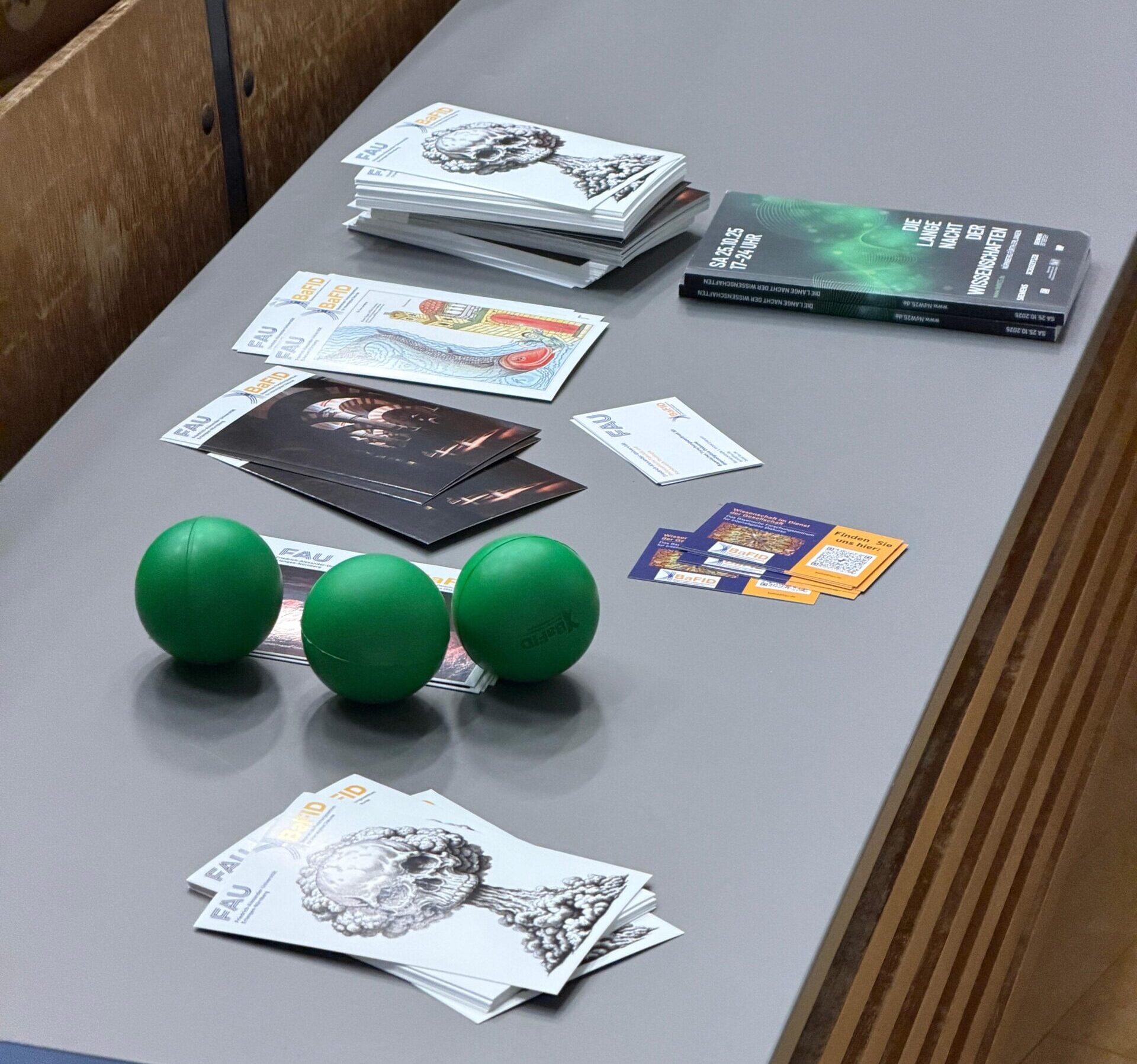
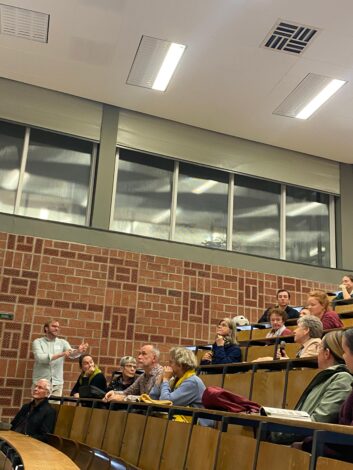
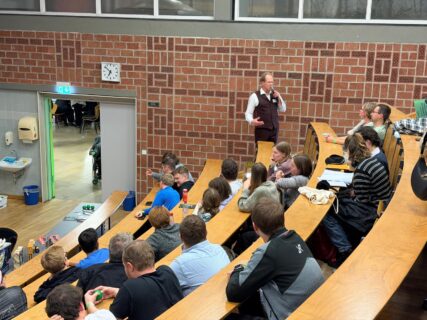
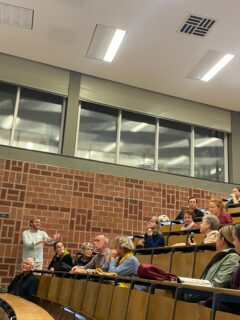
Around 27,000 visitors made the 12th Long Night of Science a resounding success. While technology and natural sciences were the focus at many of the 130 locations in Nuremberg, Fürth, and Erlangen, the Bavarian Research Center for Interreligious Discourse (BaFID) provided a decisive counterpoint: it demonstrated how closely religion, pop culture, and social responsibility are intertwined today.
Interest in science and research in the city triangle remains high. The organizers (Kulturidee GmbH) were also impressed by the massive turnout, which reached the level of 2023, and highlighted the successful exchange between researchers and the public. Amidst all the crowd, BaFID provided a varied program that included theological examinations of contemporary video games and the contemplative art of calligraphy.
When faith is ‘unpacked’: Religion in Pop Culture
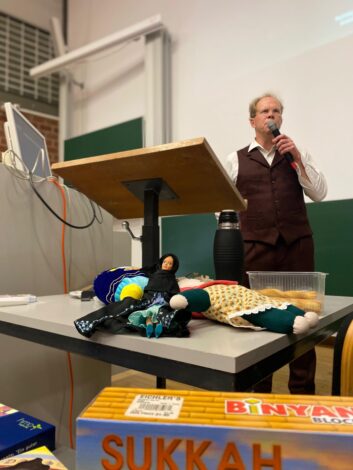
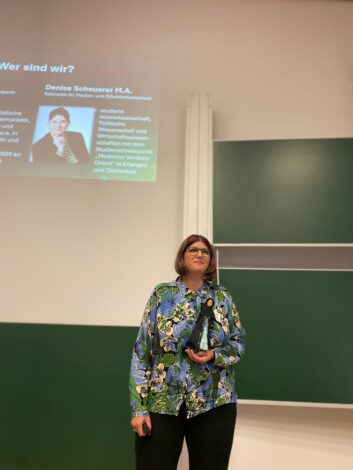
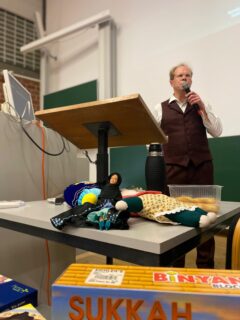
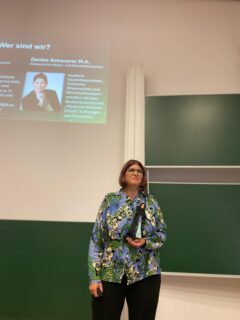
Dr. Nathanael Riemer and Denise Scheuerer highlighted how religious themes have long since found their way into children’s bedrooms and living rooms. Their contribution, “Unboxing the Gods and Saints,” shed light on a little-known phenomenon on YouTube: the unboxing and staging of religious toys. The researchers showed that these videos are much more than entertainment—they act as a mirror into a pluralistic society. And religious toys can play a role in integration as educational tools.
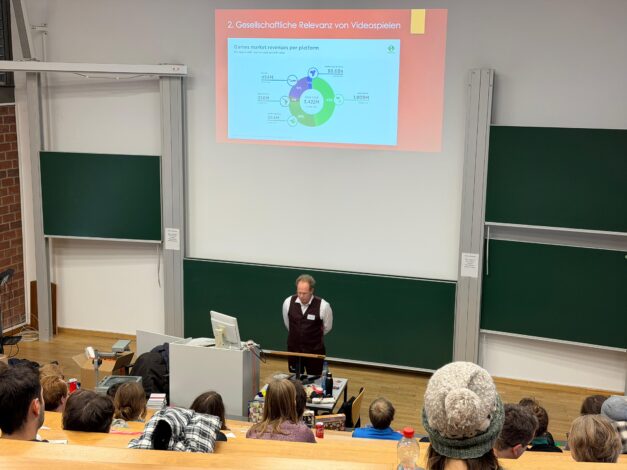
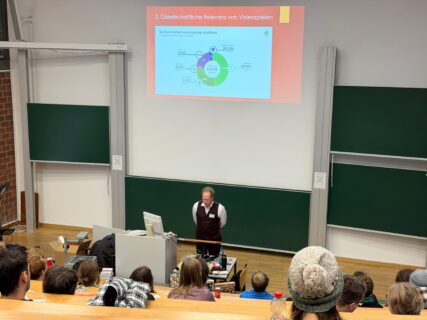
In addition, Dr. Riemer took a close look at the world of adult entertainment. In the lecture “(Mit) Gott spielen” he analyzed blockbuster games such as Detroit: Become Human. When androids are created in virtual worlds in the image of humans and preachers warn against technology, age-old theological questions are revisited in a new guise.
Serious Questions and Historical Research
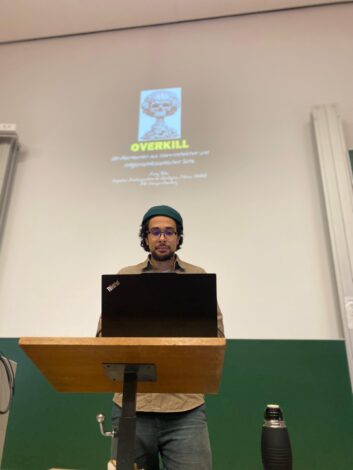
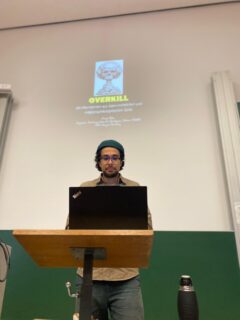
The BaFID did not shy away from serious geopolitical issues either. In his lecture, “Overkill” Ramy Abdin linked the current fear of nuclear war with considerations of Islamic law and religious philosophy. Taking the ‘Doomsday Clock’ as his starting point, he interpreted the Koranic motif of the ‘hour’ (sāʿa) in the context of modern weapons of mass destruction and artificial intelligence.
Two other projects conducted by the Research Centre took an in-depth look at the history of interfaith relations:
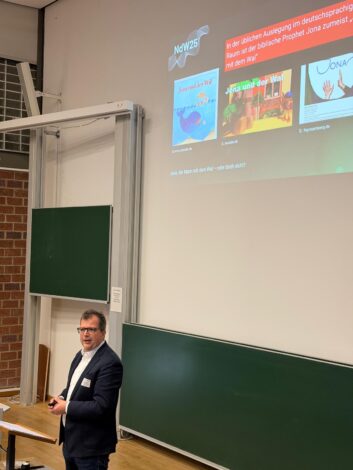
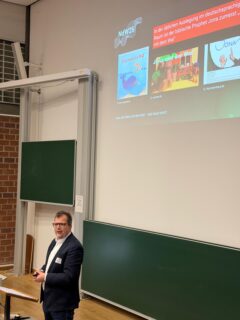
- Jonah beyond the whale: PD Dr. Christian Lange presented an international research project that takes a transdisciplinary approach to examining the biblical prophet Jonah. The lecture made it clear that the reception of this figure in Judaism, Christianity and Islam is far more complex than the well-known story of his survival in the belly of the fish.
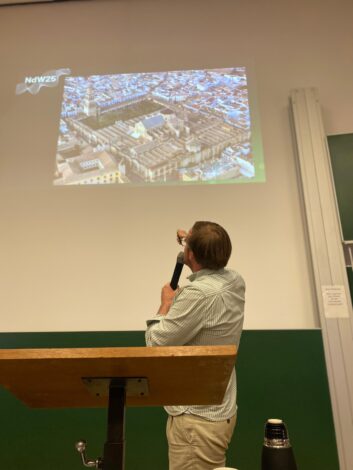
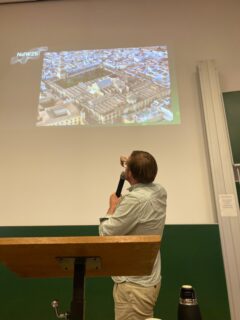
- Architectural symbiosis: Jan Gehm transported the audience to Spain to visit the Mosque-Cathedral of Córdoba. A UNESCO World Heritage Site, this building stands as a stone testament to the turbulent history between Islam and Christianity on the Iberian Peninsula—from an Emirati mosque to a Christian cathedral.
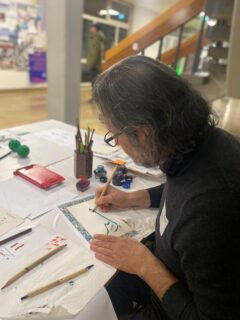
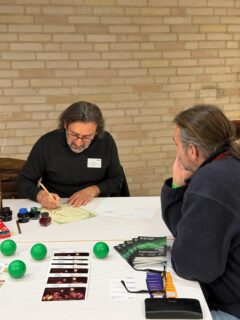
Hands-on: The Aesthetics of Writing
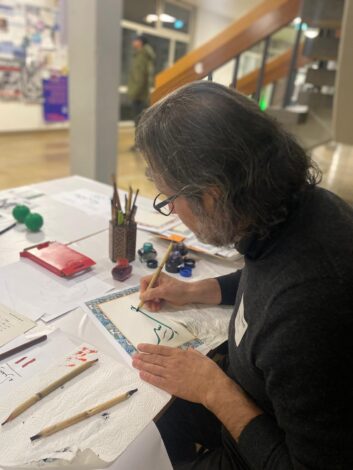
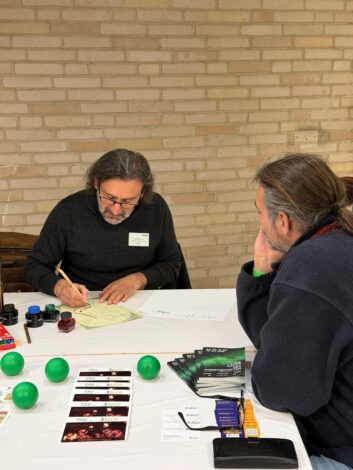
The Arabic Calligraphy Workshop offered a practical counterbalance to the theoretical discussions. In line with the organisers’ emphasis on the high level of interest in hands-on activities, curiosity was also high here. Under the guidance of Zuheir Elia, visitors immersed themselves in the meditative art of writing and learned exciting facts about the cultural depth of Arabic characters.
To conclude
The Long Night of Science has once again demonstrated the importance of dialogue between academia and society. The Bavarian Research Centre for Interreligious Discourse successfully used this platform to show that religious studies questions are indispensable tools for understanding both our history and modern media phenomena. Whether through the lens of a video game, the analysis of ancient texts, or the stroke of a quill pen, the humanities offer indispensable guidance in a complex world. The curious questions and bright eyes of the visitors were the best proof of this.